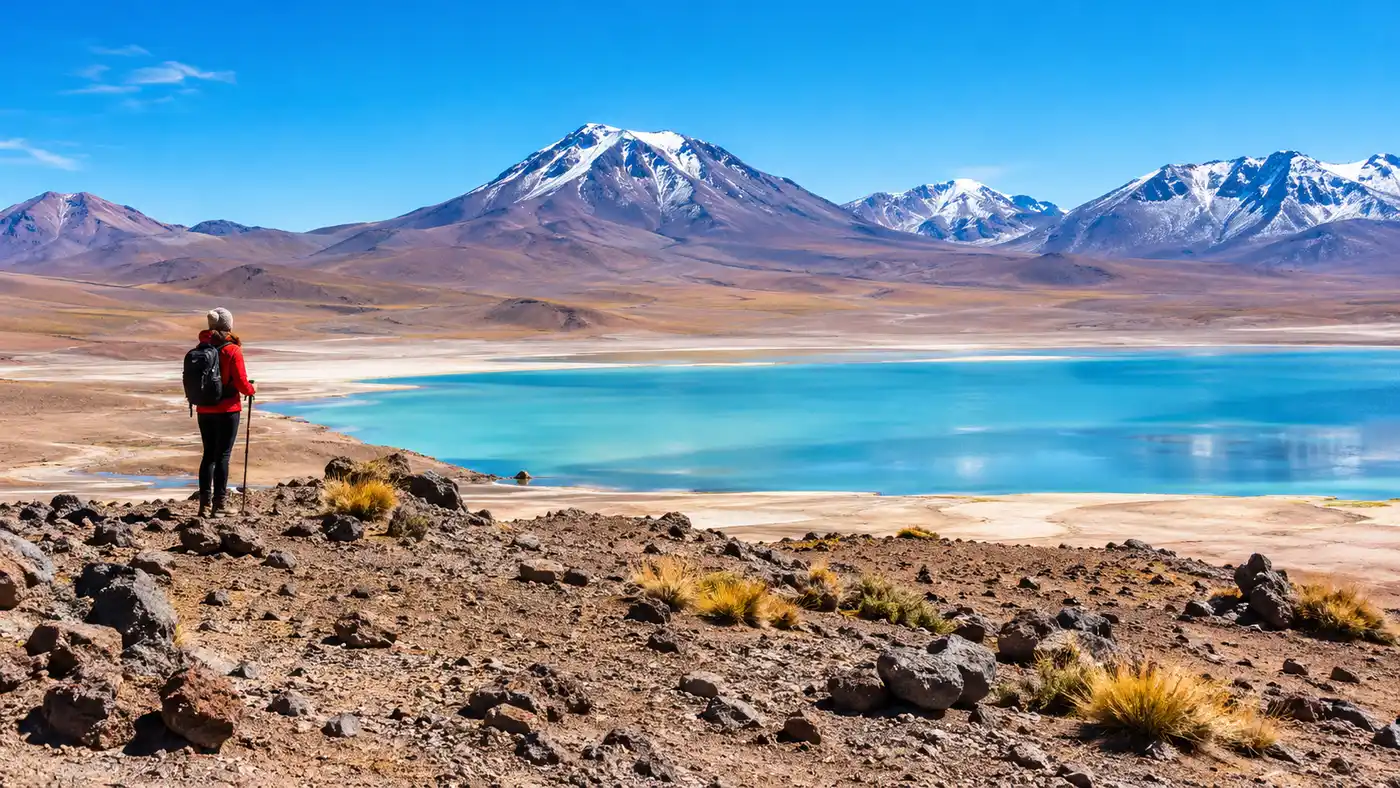
Best Time to Visit the Atacama Desert: Weather & Seasons
My first afternoon in San Pedro de Atacama, my lips split before I even finished unpacking my backpack. The air sucked the moisture out of my skin at a pace I had never experienced anywhere else on earth. Most travelers assume this hyper-arid plateau is a scorching wasteland year-round, but finding the best time to visit the atacama desert actually depends on how well you handle bone-chilling alpine mornings, summer storm cycles, and the blinding white sun of high altitude.
The weather here behaves strangely because you are dealing with two extreme variables simultaneously. You have extreme dryness combined with serious elevation, stretching from San Pedro at 2,408 meters up to volcanic passes above 4,500 meters. Whether you want to photograph flamingos in crystalline lagoons, wander the wind-carved canyons of Valle de la Luna, or bundle up for midnight stargazing, timing your trip changes everything about what you will see and feel.
The Atacama Desert Climate: Altitude, Aridity, and Wild Temperature Swings
Rain almost never falls in the heart of the desert. Some weather stations tucked between the coastal cordillera and the high Andes have recorded zero precipitation for decades at a stretch. The atacama desert climate is classified as cold desert, which surprises people who pack only linen shirts and lightweight shorts. Once the sun drops behind the western hills, the ground radiates its heat straight back into space through the cloudless atmosphere. Temperatures can plunge 20 degrees Celsius in less than two hours.
Elevation matters just as much as latitude. While San Pedro sits at a moderate elevation, the trips you take out of town climb rapidly into the puna. If you visit the geysers of El Tatio or the remote salt flats near the Argentine border, you will easily reach 4,300 meters before breakfast. Air pressure drops, the wind picks up, and ambient temperatures drop roughly 6.5 degrees Celsius for every 1,000 meters of vertical ascent.
Note: Pack a dedicated set of heavy thermal base layers, a fleece, and a windproof shell regardless of the month you choose. Even in midsummer, pre-dawn departures for high-altitude geysers will freeze your fingers within three minutes of taking off your gloves.
Sun exposure here is intense. The ultraviolet index frequently sits at 11 or higher, meaning sunburn happens in 15 minutes without sunscreen. Bring polarized sunglasses, a broad-brimmed hat, and plenty of saline nasal spray. Your sinuses will dry out quickly during the first 48 hours.
Book your atacama desert tours experience:
Spring and Autumn: The Best Time to Travel to Atacama Desert
If you want comfortable daytime exploring paired with nights that do not feel like an arctic expedition, target the shoulder seasons. April through May in autumn, and October through November in spring, offer the sweet spot for nearly every traveler. Wind speeds are generally lower during these months, the daytime heat rarely feels oppressive, and the tour crowds remain manageable compared to the summer and winter peaks.
Spring brings longer days and bright, crisp light that landscape photographers love. Afternoon temperatures hover around 23 to 25 degrees Celsius, while nights settle around a tolerable 7 or 8 degrees. You can sit outside at local patio restaurants on Calle Caracoles without shivering in a down parka. Autumn brings a similar balance, with the added benefit of completely dry conditions after the summer storms clear out of the high mountains.
- April to May highlights: calm winds, stable blue skies across the plateau, and minimal tourist traffic after Easter week.
- October to November highlights: warming desert air, prolonged daylight for long day trips, and great visibility for night sky photography.
- Layering requirements: a light windbreaker by afternoon, changing into a medium puffy jacket once twilight arrives around 7:30 PM.
Lodging prices also reflect this moderation. You will avoid the premium surcharges that hotels slap onto bookings in January or July, and local tour operators usually have open seats even if you book just two or three days ahead of time.
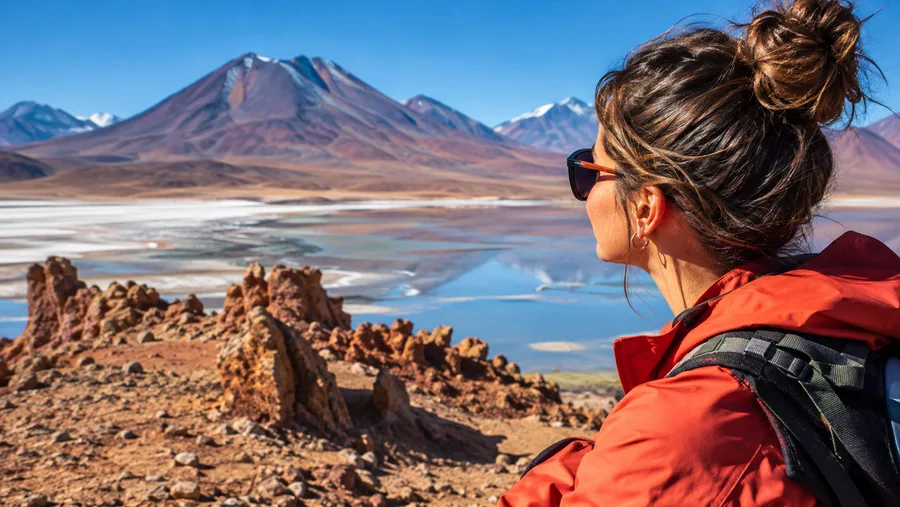
Winter Days and Freezing Nights: June to August
Winter in the desert is clean, quiet, and shockingly cold at night. June and July bring daytime highs around 20 degrees Celsius, which feels wonderful under direct desert sun. You can hike through sand dunes in a long-sleeve t-shirt and feel completely comfortable. The catch happens the second the sun dips below the horizon. San Pedro frequently drops to minus 2 or minus 3 degrees Celsius before dawn, and hotel rooms without central heating become iceboxes.
Many older adobe guesthouses rely on small space heaters that barely take the edge off the draft. If you travel during winter, paying extra for accommodation with dependable heating or a wood stove is worth every peso. Winter mornings require real grit. If your alarm sounds at 4:30 AM for a geyser tour, you will step out of your room into biting frost, and the geysers themselves regularly register minus 12 degrees when you arrive.
The upside to winter is atmospheric stability. The winter air contains almost zero moisture, creating jaw-dropping conditions for stargazing tours in San Pedro de Atacama. With more than 300 clear nights a year across the region, winter offers some of the sharpest views of the Milky Way core you will ever find. Keep in mind that July is a major vacation month for Chilean and Brazilian schools, so expect crowds along the main village lanes despite the chill.
Book your atacama desert tours experience:
Summer and the Altiplanic Winter: December to March
Summer brings hot days with thermometers reaching 29 or 30 degrees Celsius in San Pedro. That might sound mild compared to Death Valley, but at high altitude the sun hits with unusual force. Midday walks through town feel scorching, prompting most people to take siestas between 1:00 PM and 4:00 PM before heading back out for sunset.
The primary concern during this period is the meteorological phenomenon called the Invierno Altiplánico, or Bolivian Winter. From late January through mid-February, humid air masses push across the Andes from the Amazon basin. This moisture crashes against the eastern side of the mountains and spills into the high desert, producing sudden electrical storms, hail, and torrential flash floods in dry riverbeds.
Pro tip: If traveling between January 20 and February 20, keep two buffer days in your schedule. The Chilean park service often shuts access to high-elevation roads for 24 to 48 hours after unexpected mudslides or heavy Andean rainfall.
These summer rain events do not happen every day, but when they do, the infrastructure struggles. Unpaved tracks wash out, trails into steep gorges close for safety, and cloud cover ruins stargazing for days at a time. If your heart is set on high-altitude salt flats or ascending a six-thousand-meter volcano like Licancabur, midsummer carries the highest risk of disruption.
| Season | Months | Daytime Avg | Nighttime Avg | Atmospheric Conditions |
|---|---|---|---|---|
| Spring | Oct to Nov | 24°C / 75°F | 7°C / 45°F | Moderate breezes, very dry, clear skies |
| Summer | Dec to Feb | 28°C / 82°F | 12°C / 54°F | Warmest days, sporadic afternoon rainstorms |
| Autumn | Mar to May | 23°C / 73°F | 5°C / 41°F | Calm winds, very stable weather, few clouds |
| Winter | Jun to Aug | 19°C / 66°F | -2°C / 28°F | Crisp days, deep freezes at night, brilliant stars |
The Rare Atacama Desert Blossom Phenomenon
Every few years, an extraordinary botanical event turns parts of this parched territory into rolling carpets of purple, white, and yellow. Known locally as the atacama desert blossom or desierto florido, this explosion of life occurs when the El Niño climate pattern pushes unusual winter rainfall into the southern edges of the desert.
Do not expect to step outside your hotel in San Pedro and see fields of flowers. The vast majority of the bloom unfolds roughly 400 miles to the south, between the coastal cities of Caldera, Copiapó, and Vallenar. Millions of dormant bulb and seed species, including the purple pata de guanaco and scarlet añañuca, wait beneath the cracked earth for years until at least 15 millimeters of rain triggers germination.
The bloom generally reaches its peak between late August and early October. If an El Niño year is announced with winter rain across northern Chile, planning a detour down toward the Atacama Region around September will reward you with one of the rarest spectacles on earth. Just be prepared to book rental cars and coastal hotels well in advance, as Chilean travelers flock north the moment the first purple patches appear on coastal hillsides.
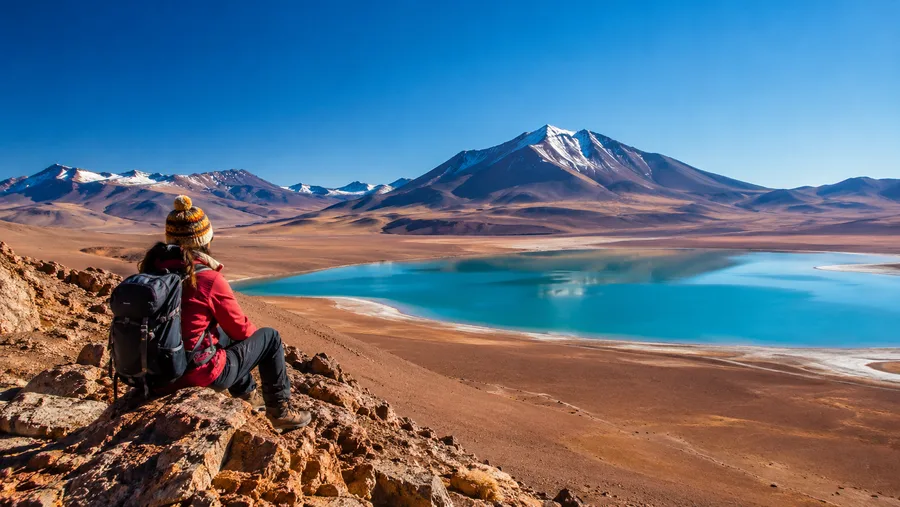
Practical Factors Beyond the Weather
Finding the best time to travel to atacama desert involves balancing climate against human schedules and celestial movements. A flawless 24-degree afternoon means little if the village is packed wall-to-wall with holiday tour buses or the moon blinds you to the galaxy above.
- Lunar cycles: Schedule your trip around the new moon if stargazing is a top priority. A full moon washes out the night sky, turning the Milky Way invisible even under pristine desert conditions.
- Chilean public holidays: Avoid Fiestas Patrias around September 18 unless you enjoy loud parties and full hotels. National holiday periods cause transport prices to double.
- High-altitude acclimation: Spend your first 48 hours below 2,500 meters before booking excursions that climb higher into the Altiplano. Altitude sickness does not care what season it is.
- Spring wind conditions: Late afternoon winds pick up sharply during September and October, kicking up dust storms in Valle de la Muerte and dropping visibility along open highways.
I usually steer friends toward May or October. In May, the ground still holds a fraction of autumn warmth, high Andean tracks are bone dry, and winter cold snaps have not yet set in. In October, you get long hours of sunshine, the summer rain is months away, and you can hike through slot canyons without wearing four layers of wool.
Frequently Asked Questions about best time to visit the atacama desert
What is the absolute coldest month in the Atacama Desert?
July is consistently the coldest month of the year. Daytime temperatures reach about 19 degrees Celsius, but pre-dawn temperatures in San Pedro drop below freezing, while excursions at elevations above 4,000 meters frequently dip to minus 15 degrees Celsius.
Can you visit San Pedro de Atacama during the rainy season?
Yes, you can visit between January and March, but you must remain flexible. Heavy afternoon rainstorms in the Andes can trigger road closures, muddy trails, and sudden cancellations of high-altitude tours to lagoons and geysers.
How many days do you need in the Atacama Desert?
Four to five full days is ideal. This timeframe gives your body 24 to 48 hours to adjust to the elevation before attempting higher tours, while leaving room for an astronomical tour and visits to the salt flats.
Quick Reference
- Best overall months: April, May, October, November
- Stargazing peak: May through August around the new moon
- Rain risk: Late January through mid-February
- Coldest nights: June and July (often below -2°C)
Book your atacama desert tours experience:
Making Your Choice
There is no truly terrible month to visit this corner of Chile, provided you know what kind of conditions you are packing for. If you hate the cold, avoid midwinter at all costs and aim for November. If crystal-clear skies and jaw-dropping night astronomy matter more than cold toes, pull on heavy thermal layers and head down in June. Pick the window that fits your tolerance for cold mornings, drink triple the water you think you need, and give your body time to adapt to the thin, electric desert air.
Read more about atacama desert tours.